Root Barriers in Northeast Texas
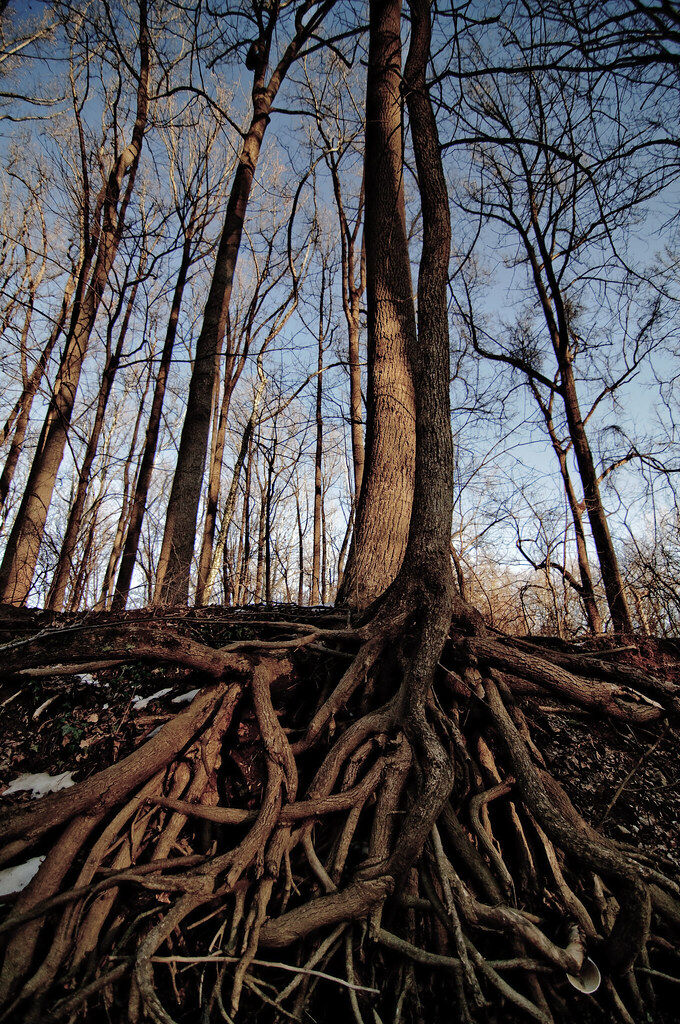
Mature trees are half of what makes older Greenville and Terrell neighborhoods worth living in — and they’re also a quiet foundation threat specific to clay soil. A large tree near a house doesn’t damage the foundation by pushing on it; it damages it by drinking. A mature oak or elm can pull hundreds of gallons of water from the soil on a hot week, and when its roots reach under one side of a slab, they dry and shrink the clay there while the rest of the foundation stays put. The result is the classic one-corner settlement pattern, worst in late summer.
What a root barrier is
A root barrier is a vertical wall in the soil — typically high-density plastic or a composite membrane — installed in a trench between the tree and the foundation, usually 30–48 inches deep. Roots that would have grown under the slab are deflected downward and around, keeping the tree’s moisture draw away from the soil that supports the house. The tree keeps its water sources on its other sides; the foundation keeps its moisture stability. Done properly, it protects both — removing a mature tree is a last resort, not a plan.
When a root barrier is the right call
- A large tree (or a neighbor’s) stands within roughly 20 feet of the foundation and the nearest corner shows seasonal settlement.
- You’re repairing a foundation where tree-related drying contributed — piers fix the settlement; the barrier stops the cause from continuing.
- You’re planting trees on a new lot and want to place protection before there’s a problem (far cheaper than after).
How installation works
- Assessment — species, size, distance, and which foundation sections show the moisture-drying pattern; we’re honest when a tree is not the culprit, because drainage and plain drought do the same thing.
- Trenching — a narrow trench between tree and foundation, routed to minimize root cutting; significant roots encountered are cleanly cut, which the tree handles far better than torn ones.
- Barrier placement and backfill — membrane set to depth with the top edge at or just above grade so surface roots can’t creep over.
What affects your price
Length and depth of the run, trenching conditions (roots, rock, tight side yards), and hardscape in the path. Most residential barriers protect one or two sides of a foundation, not the whole perimeter.
Get an evaluation
Fill out the form on this page — or call or text us — and we’ll look at the trees and the settlement pattern together.